
NZ Health Survey: Half who’ve had Long Covid symptoms still affected
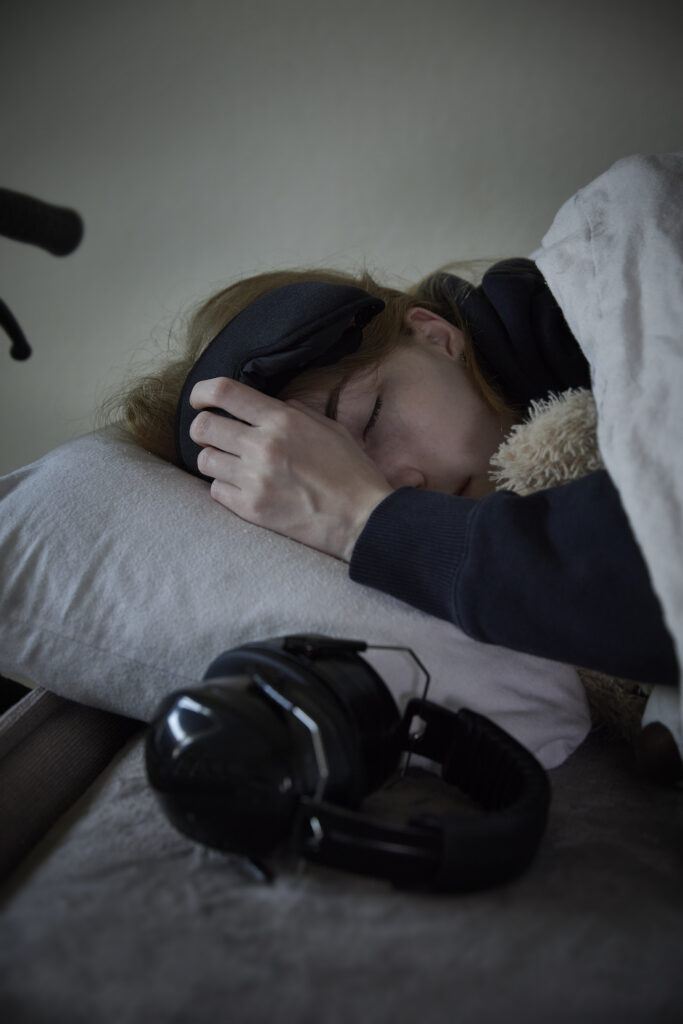
Image credit: Sergej Preis and German Association for ME/CFS
Media Release: Long Covid Support Aotearoa
The latest New Zealand Health Survey suggests almost half (47.8%) of adults who report having had Long Covid symptoms are still experiencing them.
Nearly 200,000 New Zealanders are currently living with Long Covid, out of 425,000 who have experienced symptoms at some point.
Both figures have increased modestly since the previous survey, representing around 7,000 more people currently affected and 24,000 more who have ever had symptoms.
Notably, Māori adults were again more likely to report current Long Covid symptoms than European adults (5.6%, compared with 4.6%) – a full percentage-point difference.
Despite the pandemic receiving less attention, the health and social consequences remain very real. New Zealand still has no national pathway of care and support for people with Long Covid.
The latest figures suggest that:
- New cases continue to add to the population ever affected.
- The number of people with persistent symptoms may be growing.
- Even if infections are less frequent, their consequences remain substantial.
The current scale of Long Covid (4.4% of adults or 192,000 people) is comparable to that of ischaemic heart disease, COPD and gout (eg, ischaemic health disease comprises 4.7% of adults or 204,000 people). The chart shows Long Covid as compared to other common health conditions in this latest New Zealand Health Survey:
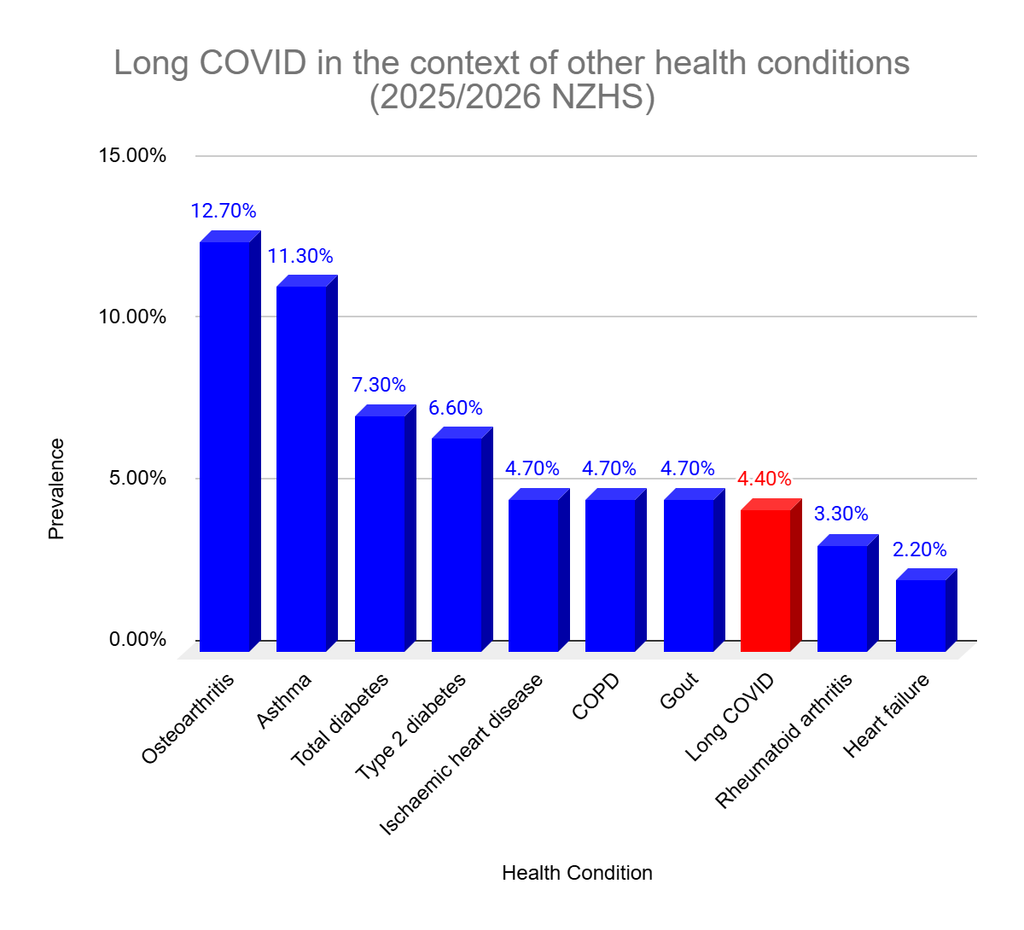
Chart made by: Catherine Appleby
Around half of those who have ever experienced Long Covid symptoms continue to report them, highlighting the persistence of this health issue. This should not be interpreted as a recovery rate, however, as the survey provides a snapshot at one point in time.
Long Covid can have major impacts on quality of life, with patient-reported impacts comparable to those with multiple sclerosis. New Zealand research has also found significant effects on work capacity: nearly one in four affected respondents reduced their working hours, while a further third worked the same hours but found it harder or got less done.
Lack of response
“It’s depressing to see thousands more people suffering, while so little has changed in how our country responds to Long Covid,” says Larisa Hockey, Chair of Long Covid Support Aotearoa.
Health New Zealand has told media it has no one working on Long Covid, while the Ministry of Health’s Long Covid work programme ended in 2022.
New Zealand has very limited specialised services, aside from one physiotherapy-led clinic in Taranaki. Unlike most comparable countries, we have never developed a network of Long Covid clinics, and access to specialist medical expertise is limited.
“A persisting health burden requires a persisting health system response,” Hockey says.
Lack of prevention
“We are disappointed that 24,000 more people have had to face Long Covid in the year since the previous survey,” says Kim Jackways, Long Covid Support Aotearoa committee member.
“Long Covid is preventable. New Zealand should be doing much more to prevent Covid spreading in the first place. Clean air measures in schools are low-hanging fruit that would help prevent the spread of illness in families and communities.”
Long Covid Support Aotearoa is calling for:
- National monitoring of Long Covid prevalence
- An economic analysis of the costs of Long Covid to New Zealand
- A national pathway of care and support, ensuring timely diagnosis, informed healthcare, appropriate treatment and ongoing financial and practical support
- Wider access to Covid prevention measures, including clean air in schools, masks in healthcare and wider vaccine access for all ages from six months.
“Today’s survey makes clear that Long Covid remains a major, ongoing public health issue,” says Hockey.
“192,000 New Zealanders is the equivalent of the population of Hamilton. A health burden of this scale cannot be ignored. The problem is persisting and the Government needs to act urgently.”
ENDS
Note: These estimates are based on people’s awareness and recognition of their Covid infection and subsequent symptoms. The survey asked about symptoms lasting at least three months, not necessarily a formal Long Covid diagnosis, and only asked about symptoms among people who reported a previous Covid infection. People with unrecognised Covid infections may therefore be missed. The survey questions may not capture everyone affected by Long Covid, meaning the true prevalence could be higher.